How to dress for your body type
Four builds, twelve rules. What actually changes between a narrow frame, an average one, a solid one and a heavy one — and why "wear darker colours" is the least useful advice in menswear.
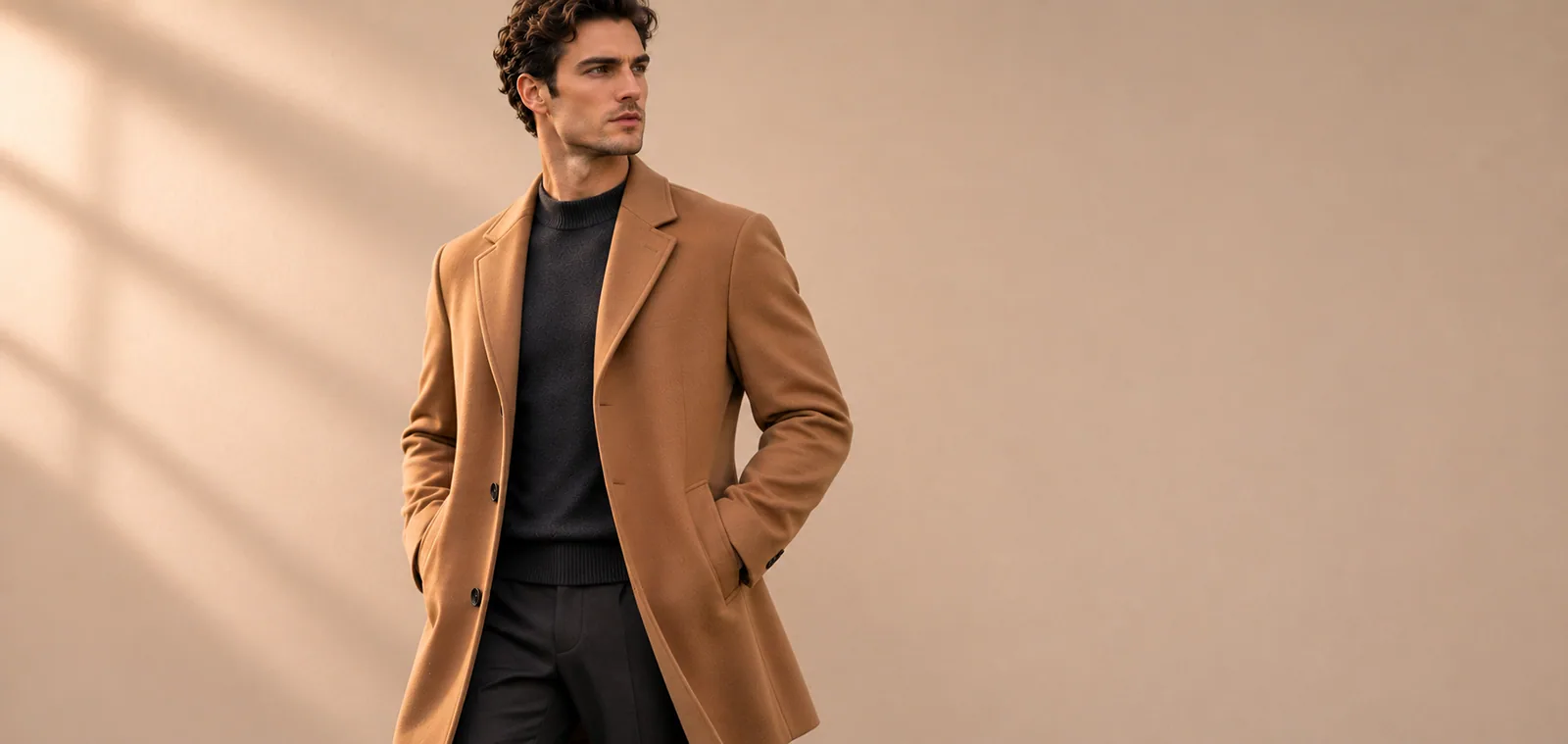
Most body-type advice for men is one idea repeated in different fonts: hide the thing you do not like. Wear dark colours. Wear vertical stripes. Wear a looser fit. It is advice written for photographs, not for rooms, and it produces men in shapeless clothes who look like they are apologising for their own bodies.
The alternative is proportion. Every body has a widest point, a longest line, and a place where a horizontal break does the most damage. Fix those three and the rest of the wardrobe stops fighting you.
Below are four builds. Find the one closest to yours, take the three rules, and ignore the rest — they will not apply.
First, why “dress for your body type” usually fails
Two reasons.
The first is that body types are described by shape names — apple, pear, rectangle, inverted triangle — which were invented for women’s tailoring and then copied across without much thought. A man’s silhouette is governed by three different measurements: shoulder width, chest-to-waist drop, and leg-to-torso ratio. Those are the numbers that change what fits.
The second is that clothing does not conceal; it redistributes. A jacket with a structured shoulder does not hide a narrow frame, it lends it width. A high-rise trouser does not hide short legs, it starts the leg higher. Everything useful in menswear is a redistribution of apparent width or apparent length. Nothing is a disguise.
Once you accept that, the advice becomes mechanical.
The narrow frame
Shoulders narrower than or level with the hips, a chest that does not project, long limbs relative to the torso.
Rule one: structure at the shoulder, never padding at the chest. A jacket with a clean, lightly padded shoulder sits on the bone and reads as your shoulder. A jacket with a soft, unstructured shoulder collapses inward and makes the frame look smaller than it is. The difference is visible from three metres.
Rule two: mid-weight fabrics, not fine knits. Fine-gauge jersey and thin cotton cling and outline the frame. Oxford cloth, mid-weight wool, and any cotton with visible texture hold their own shape and give the silhouette something to work with.
Rule three: one layer, structured. An unstructured jacket over a shirt reads intentional. Three thin layers over each other read as a man trying to add bulk, which is the one thing nobody believes.
Avoid: double-breasted jackets (the extra button row needs chest volume it will not get), oversized fits (they make a narrow frame look borrowed, not relaxed), and anything described as “drapey”.
The average build
Shoulders slightly wider than the hips, a visible but modest chest-to-waist drop, leg and torso roughly in balance. This is the build most menswear is cut for, which means the clothes will fit and the work is elsewhere.
Rule one: get the lengths right, and stop. Trouser hem breaks once on the shoe. Jacket hem at the hip bone, not below the seat. Sleeve ends at the wrist bone with one centimetre of cuff showing. These three measurements do more for an average build than any colour decision.
Rule two: do not add volume to look “bigger”. This is the most common error in this group. Average men who lift often buy a size up in the chest and end up with a jacket that pulls at the button — which reads as too small, not too strong.
Rule three: one statement, maximum. A textured jacket, or a patterned shirt, or a strong shoe. Two of those at once and the outfit reads as an attempt.
Avoid: anything that requires a tailor to “take it in at the waist” on a jacket that was not cut for it. Buy the right shoulder and leave the waist alone.
The solid build
Shoulders clearly wider than the hips, a chest that projects, often a shorter neck relative to shoulder width.
Rule one: one colour from shoulder to shoe. A contrast break at the waist draws a horizontal line exactly at the widest part of the body. Navy on navy, charcoal on charcoal, olive on olive. This single change is worth more than every other rule below.
Rule two: structure, not drape. A jacket with a firm shoulder and a clean chest makes a solid build look deliberate. A soft, unstructured jacket clings at the chest and flares at the hem, which is the worst possible outline.
Rule three: straight or slightly tapered leg. Not skinny — skinny on a solid build reads as strain, and strain reads as a size problem rather than a body. Not wide either: a wide leg on a wide build squares the whole silhouette.
Avoid: horizontal stripes, shiny fabrics, and short jackets. The jacket hem should sit at the hip bone; anything shorter makes the torso look compressed and the legs look short at the same time.
The heavy build
A frame where the midsection is the widest point and the shoulder line is less defined.
Rule one: matte, dark, single colour. Sheen adds visual bulk because it reflects light unevenly across the body. Matte wool in a single dark tone is the most forgiving fabric that exists, and it is not close.
Rule two: jacket buttoned, one button, sitting flat. An open jacket on a heavy frame creates two vertical panels that widen the outline at the exact point you are trying to narrow. Button it and the eye reads one continuous column.
Rule three: fit at the shoulder is the only measurement that cannot be fixed later. Shoulder seam on the bone. Everything else — sleeve, hem, waist — a tailor can adjust. If the shoulder is wrong, the jacket is wrong, and no amount of alteration saves it.
Avoid: vertical stripe patterns sold as slimming (they draw attention to the surface they are printed on), high-contrast belts, and any garment described as “relaxed fit” — in practice that means “the same pattern, scaled up”, which is not the same as “cut for a fuller body”.
The thing all four builds share
Posture and hem length.
Shoulders back and down, chin level, weight through the middle of the foot. This is not a styling trick; it is the platform the rest sits on. A man who slouches loses four to five centimetres of apparent height and gains nothing.
Hem length is the second universal. A jacket that ends at the hip bone gives you back the leg length that the jacket below the seat takes away. Check it in a mirror from the side, not from the front — the front view lies about where the hem actually lands.
None of this is taste. It is a set of decisions about where lines start and stop, and it can be measured rather than guessed. If you want to know which three rules apply to your specific frame — shoulder width against hip width, chest against waist, leg against torso — that is the first thing a structured read of your photo tells you.
Read next