How often should you get a haircut
A short fade needs a barber every three weeks. A medium cut lasts six. The number is set by the length on the sides and the shape of the outline — here is how to work yours out before you need it.
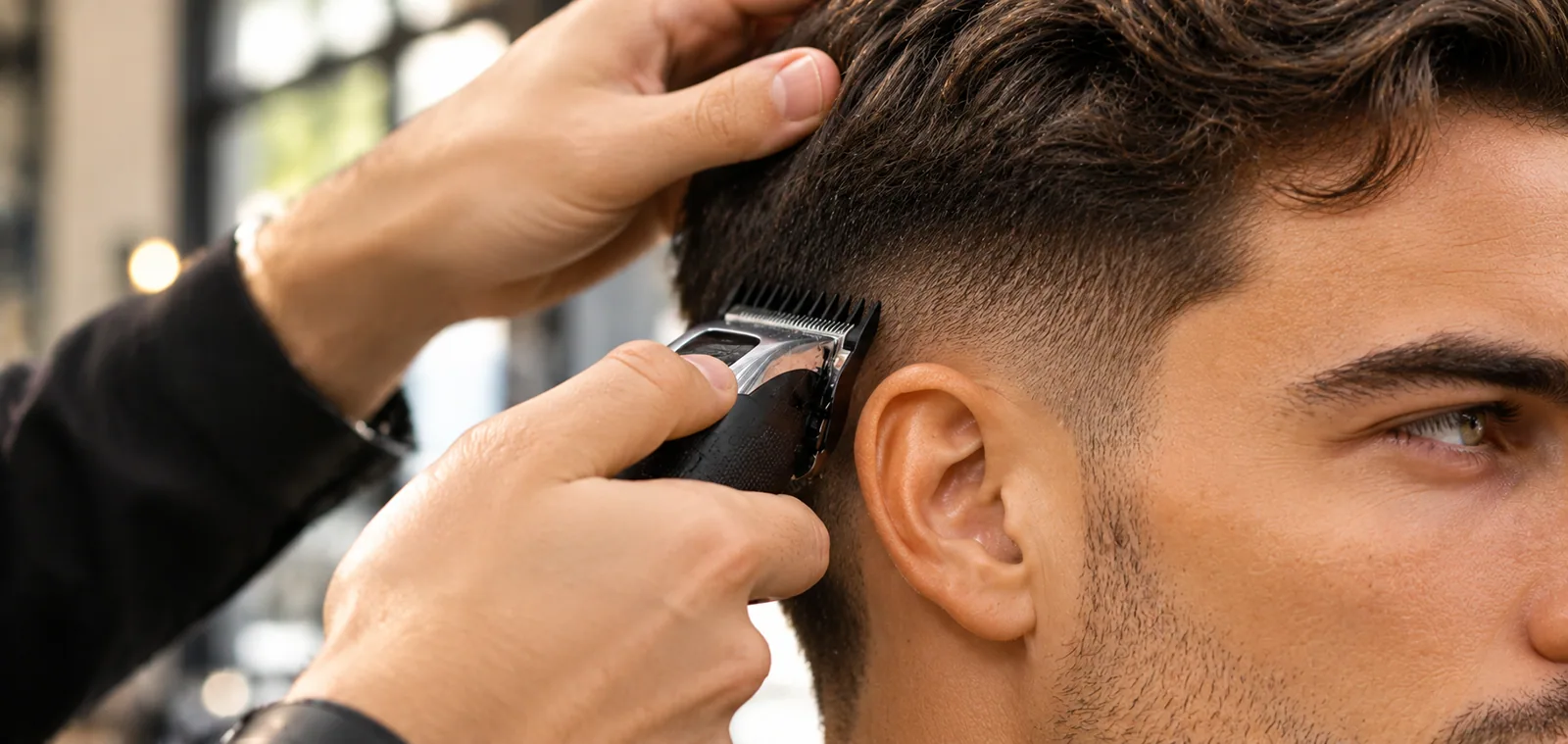
There is no correct interval. There is only the interval your specific cut allows before it stops reading as a decision and starts reading as neglect.
That interval is set by one thing: how much of the shape is created by the cut, rather than by the hair’s own weight. A high skin fade is almost entirely cut — within ten days the clean edge has grown out and become a soft, uncertain gradient. A medium scissor cut with a fringe is mostly hair weight — it can drift for six weeks and still look like the same haircut.
So the question is not “how often do men get haircuts”. It is “which of these two types is my cut”, and that gives you a number.
The intervals, by cut
These are weeks from the appointment, not weeks between noticing and going.
| Cut | Realistic interval | What fails first |
|---|---|---|
| Skin or #0.5 fade | 2–3 weeks | The hard line at the fade disappears |
| #1–#2 fade | 3–4 weeks | The blur turns into a band |
| Short crop with a taper | 4–5 weeks | The neckline and sideburns lose their edge |
| Medium scissor cut, parted | 5–6 weeks | The parting stops holding without product |
| Long on top, short sides | 6–8 weeks | The top gains weight and the sides look pinched |
| All one length, grown out | 8–12 weeks | Split ends, no shape at the front |
If you are in the first two rows and you are going every six weeks, you are spending two weeks of every cycle in the state that looks worst. That is the whole problem most men describe as “my hair grows too fast”.
Why week two always looks wrong
The clean lines a barber cuts are geometric. Hair does not grow geometrically.
On the sides, a fade is a sequence of lengths gradiented into each other. Within about ten days the shortest band has grown into the band above it, and the transition that was crisp becomes a smear. This is not a bad cut — it is a correct cut that has aged.
On top, the same growth produces the opposite effect: length adds weight, weight adds volume, and a shape that was standing up starts falling over. A cut designed to sit up will sit down by week three unless you use product to hold it.
Both effects peak in the same window: roughly days 10 to 21. That is why the “bad week” is so consistent across different hair types and different cuts.
The maintenance cycle that fits an actual life
Two appointments a month is not realistic for most people. Three options, in order of how much they solve.
Option one: book the next appointment before leaving. This sounds trivial. It is the single highest-impact change available, because the failure is almost never “I did not know I needed a haircut” — it is “I meant to book and then it was three weeks later”. Book four weeks out, from the chair, every time.
Option two: learn one thing to do at home. Not a full routine. One thing: for a fade, an edge-up at the neck and sideburns at day 10 buys you a week. For a cut that falls over, a matte clay applied to dry hair at the roots buys you four days. Pick the one that matches your cut and ignore everything else sold to you.
Option three: choose a cut with a longer cycle. This is the real answer if you genuinely do not want to visit a barber monthly. Move from a fade to a taper, or from a taper to a scissor cut. You lose some sharpness and gain four weeks of looking acceptable. That is a legitimate trade, and it is the one most men with busy schedules should be making.
What happens if you stretch it
Three specific things, in order of how much they cost you.
The neckline goes first. A clean taper becomes a soft, overgrown line down the neck, and the eye reads it as an untidy collar rather than an untidy haircut. This is the most visible failure and the cheapest to fix — many barbers will do a neck tidy between cuts at no charge or for a nominal amount.
The sideburns go second. They lose their square or taper and become a vertical blur, which changes the whole side profile.
Product stops working third. By the time your usual clay no longer holds the shape, you are not out of product — you are past the cut’s design life. Adding more product at this stage produces the greasy, heavy look that people correctly read as trying too hard.
The rule to take away
Write the date of your last cut on your phone, add the interval from the table, and treat the result as the appointment date rather than a reminder. The difference between a man whose hair always looks right and one whose hair sometimes looks great is almost never the barber. It is whether the second appointment was booked while the first one still looked good.
If you are not sure which cut you should be maintaining — or whether the one you have is working with your face shape at all — that is a measurement question, not a taste question. The three cuts in a report come with the exact side and top lengths, so the interval and the barber script are decided at the same time.

Read next